
Bitumen Driveways
Cost-effective two-coat bitumen spray seal driveways for long access drives, sheds and rural properties across the Sunshine Coast. Call Sunshine Coast Asphalt Driveways today!
Learn More →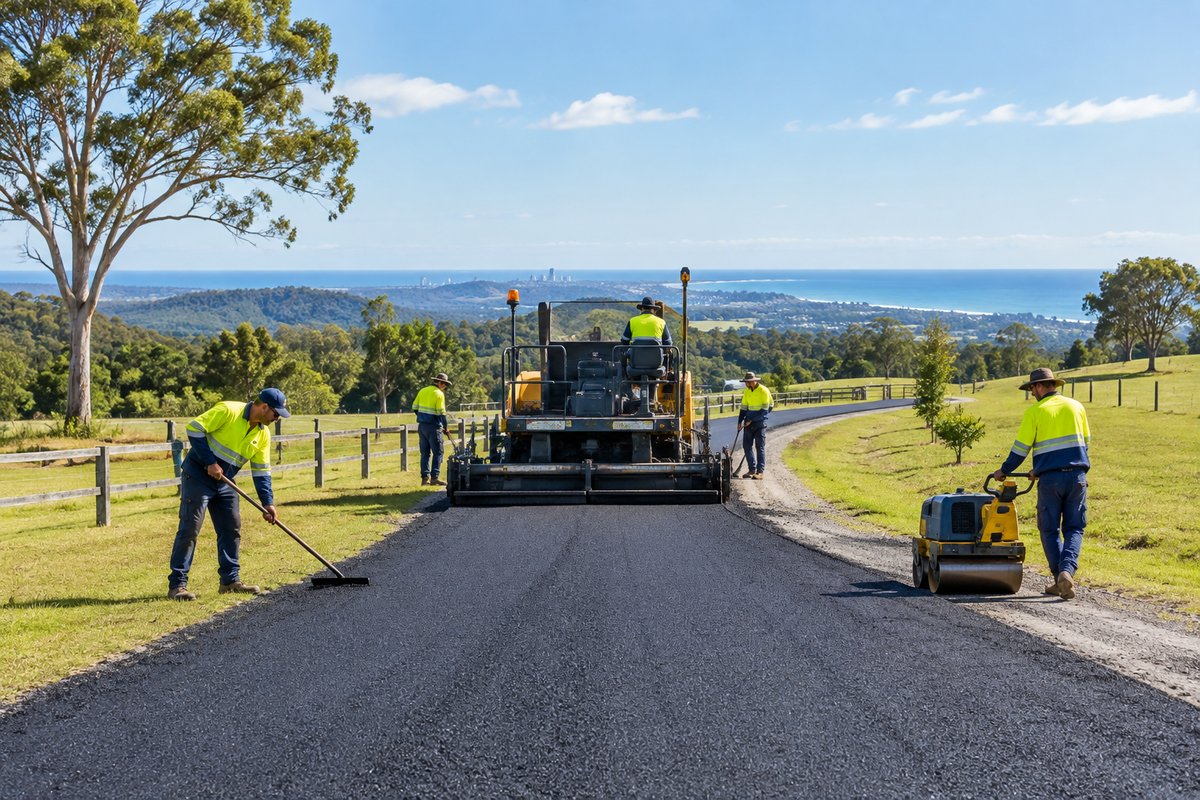
Long acreage and hinterland driveways, built up and drained to handle heavy summer rain, steep grades and farm vehicles. Contact Sunshine Coast Asphalt Driveways today!
Request a Free Quote
A long gravel driveway on acreage is hard to keep in shape. After every summer storm you are out with a shovel filling potholes, raking scour lines back in and dodging the corrugations that rattle the ute. We take those tracks and turn them into sealed access roads. First we reshape the formation with a grader. Then we build up compacted crushed-rock road base and finish with a two-coat spray seal, hot-mix asphalt, or a mix of both. Many owners choose spray seal for the long run in from the road and asphalt for the turning area near the house, where tight steering and parked vehicles would scuff a chip seal. You can read more about how a sprayed finish works on our bitumen driveways page.
Conditions on the Sunshine Coast are tough on unsealed roads. Heavy wet-season rain runs straight down the wheel tracks, and on the red volcanic soils around the Blackall Range it carries fines out of the base until the surface breaks up. Lower down, sandy coastal soils and reactive clays on the flats each bring their own problems with drainage and bearing strength. That is why we spend as much time on water as we do on the seal. We build in crossfall, table drains, spoon drains, rollover humps on steeper grades and culvert pipes where the driveway crosses a gully, so runoff leaves the pavement before it can soften the base.
Every rural job starts with access. We check truck turning room, low branches, soft causeways and load limits on old timber crossings before any gear arrives. If your property already has a sealed driveway that is cracking, ravelling or breaking at the edges, we can often patch and resurface it rather than rebuild it. Our asphalt resurfacing and repairs service covers that work. We also handle the crossover where your driveway meets the road, so it lines up with council requirements and the road edge.
Every stage is planned around drainage, base strength and the long distances found on rural blocks.
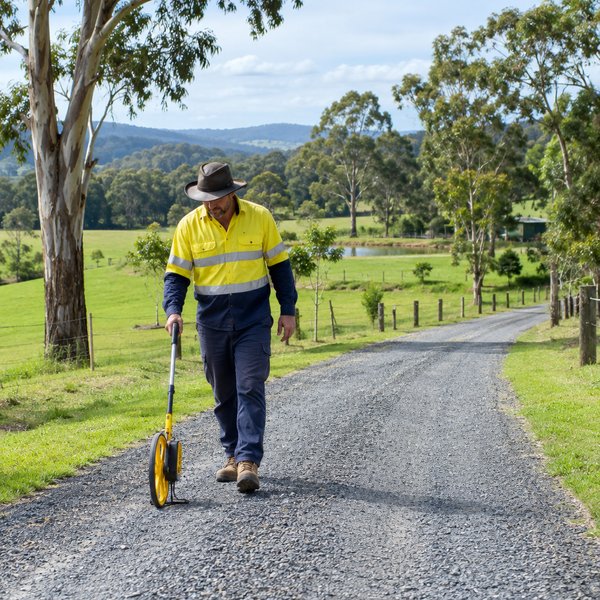
We walk the full length of the driveway and note grades, soft spots, low points and where water crosses or pools after rain. We also check truck access, overhanging trees and any culverts or causeways. From that we set out levels and a drainage plan, so the seal goes onto a formation that sheds water.
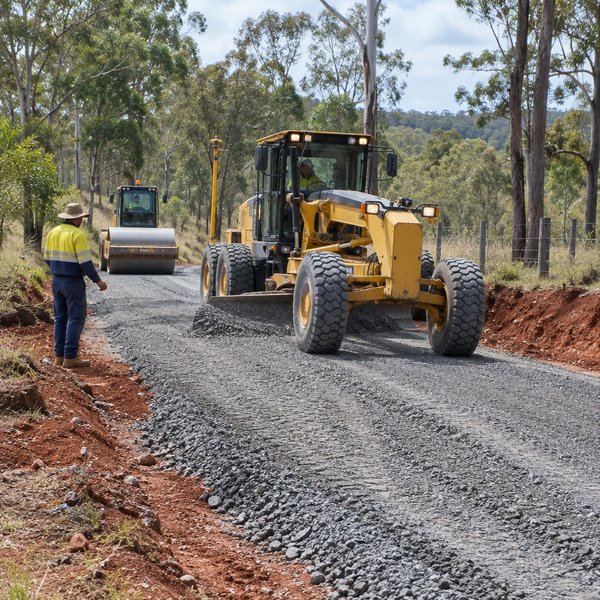
A grader reshapes the track with crossfall, and we cut in table drains and spoon drains where they are needed. Soft areas are dug out and replaced. We then lay crushed-rock road base in layers, watering and compacting each one with a vibrating smooth drum roller until it is firm and evenly shaped.
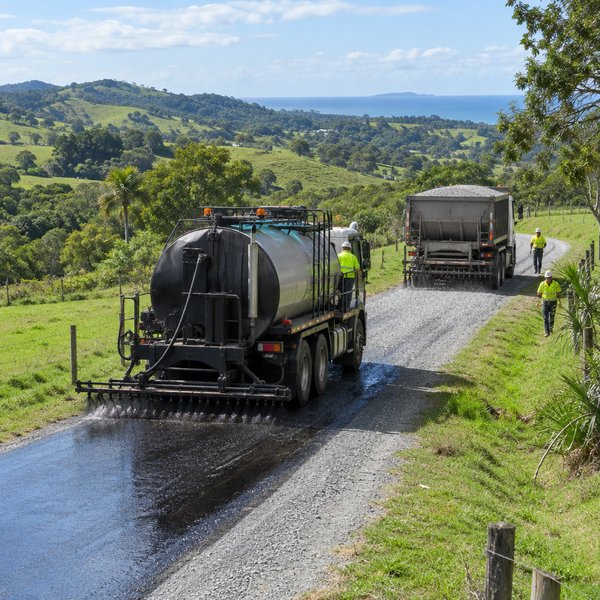
Once the base is tight and dry, a bitumen sprayer truck applies a primer or first coat of hot bitumen. A spreader drops clean aggregate straight onto it, and a multi-tyred roller presses the stone into place. A second coat of binder and smaller aggregate locks the surface together for a tougher, more waterproof finish.
Where you want a smoother, harder-wearing surface, such as the house turning area or a steep section, we lay hot-mix asphalt with a paver and compact it with rollers. We trim the edges, clear loose stone and check that drains, culverts and crossfall are carrying water off as planned. Then we walk you through when you can drive on it and what to watch for in the first weeks.
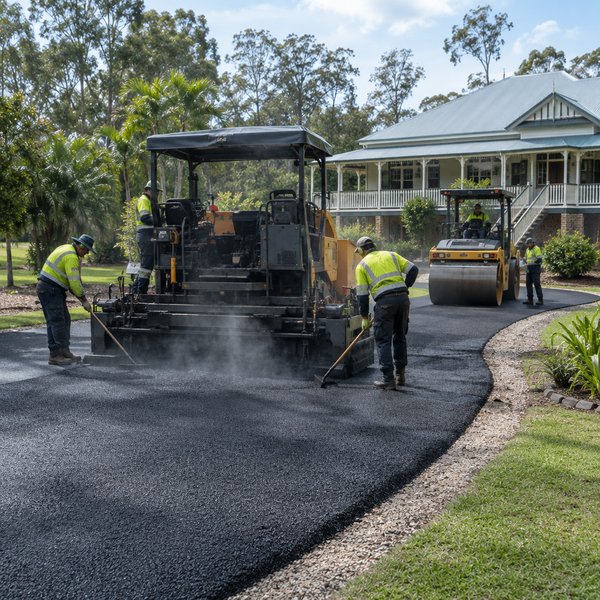
Firm, dust-free access that holds up through hinterland storms and wet seasons.
A sealed surface over a compacted base, with water directed off into proper drains, stops rain cutting channels down your wheel tracks. You spend wet-season weekends doing other things instead of raking gravel back into place. Emergency vehicles, deliveries and visitors can also get in reliably after heavy rain.
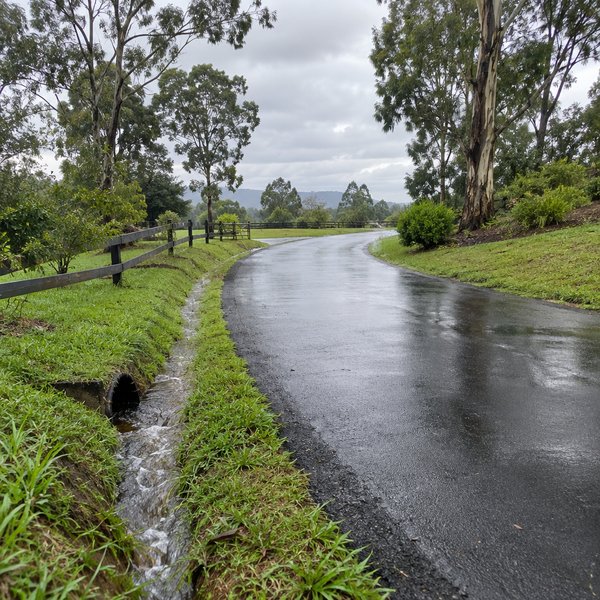
Gravel driveways throw dust over the house, water tanks and washing in dry spells, then turn to mud in the wet. A sealed driveway keeps both out of your home and off your cars. Removing corrugations and potholes also means less stone chips, rattles and suspension wear on the daily drive in and out.
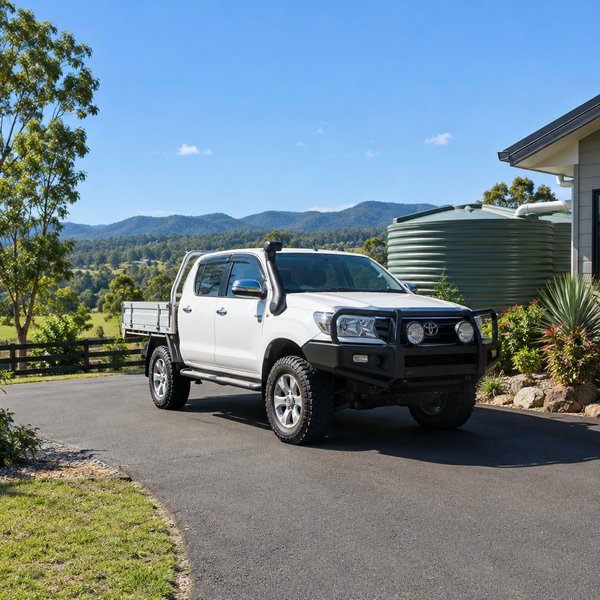
A well-built sealed driveway makes the property easier to live on, with firm access for horse floats, trailers, caravans and tradies' trucks. It also gives a tidy, finished first impression from the front gate. If you ever sell, buyers can see the driveway has been built properly rather than patched.
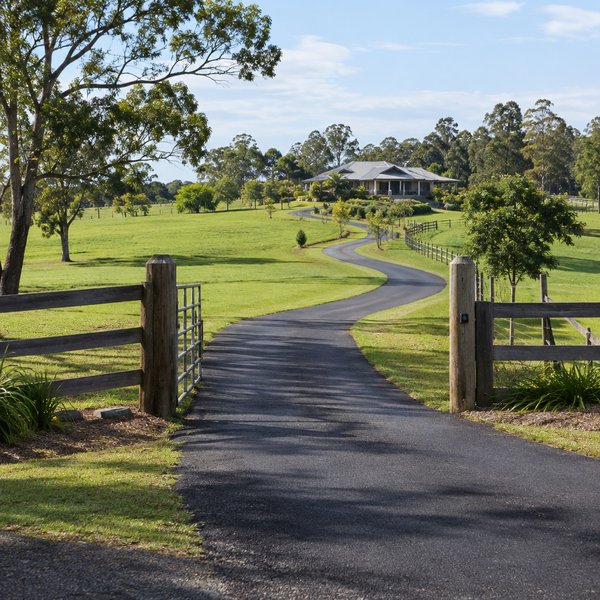
Most rural driveway failures on the Sunshine Coast come from water getting into the base. We plan crossfall, drains, spoon drains and culverts before we talk about the surface. That focus on drainage is what keeps a seal intact through repeated wet seasons.
Red volcanic soils up on the range, reactive clays on the flats and sandy ground near the coast all behave differently under traffic and rain. We adjust base depth, compaction and drainage to suit what is under your driveway. That avoids both over-building and under-building.
We do not push one product for the whole driveway. Spray seal on the long run, asphalt where vehicles turn and brake, and sealed hardstands for sheds and machinery are all options. You get a driveway matched to how you actually use the property.
Grading, road base, culverts, spray sealing, asphalt and crossovers are all handled by our team. You deal with one contractor from the front gate to the house. That means fewer hand-overs and no gaps between trades.
Common questions answered
For long runs, a two-coat spray seal usually gives the best value and handles normal car and ute traffic well. Hot-mix asphalt is smoother and resists scuffing from tight turns, so it suits house aprons, turning circles and steep sections. Many acreage owners use both, and we can show you where each makes sense on your block.
The biggest factors are length and width, how much base needs to be imported, and the condition of the existing track. Drainage works, culverts, steep grades and difficult truck access also add to the job. Choosing spray seal, asphalt or a combination changes the price too, so we quote after walking the site.
Sometimes the existing gravel can be reshaped, topped up with fresh road base and compacted ready for sealing. If the base is thin, full of clay, or soft from years of poor drainage, those sections need to be dug out and replaced first. We test the formation during the site walk and tell you honestly which parts will hold up.
Timing depends on driveway length, how much grading and drainage work is needed, and whether we are laying spray seal, asphalt or both. Bitumen needs a dry base and dry weather to bond properly, so heavy summer rain can push dates back. We plan around the forecast and will not seal over a wet base just to keep to schedule.
Keep table drains, spoon drains and culvert inlets clear of leaves, grass clippings and silt, especially before the wet season. Trim back roots and overhanging vegetation that can lift or shade the edges. If you spot cracking, stripping stone or edge breaks, get them fixed early before water gets underneath and softens the base.
We provide Acreage & Rural Driveways throughout the Sunshine Coast, QLD and surrounding suburbs.
Don't see your area? Contact us to check if we service your location!
View All Areas