
Acreage & Rural Driveways
Long acreage and hinterland driveways, built up and drained to handle heavy summer rain, steep grades and farm vehicles. Contact Sunshine Coast Asphalt Driveways today!
Learn More →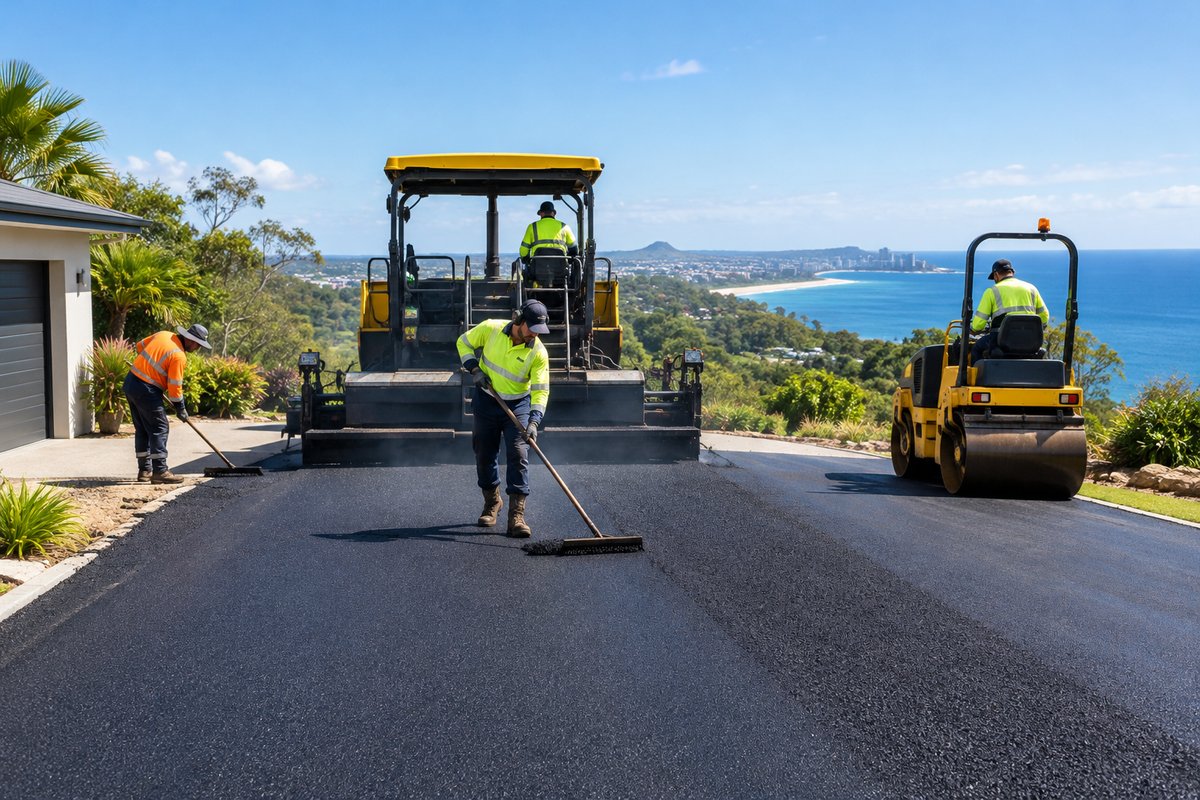
Cost-effective two-coat bitumen spray seal driveways for long access drives, sheds and rural properties across the Sunshine Coast. Call Sunshine Coast Asphalt Driveways today!
Request a Free Quote
A sprayed bitumen driveway is a hard-wearing, sealed surface built in layers. We grade and compact a crushed rock base, spray hot bitumen over it, then spread and roll a layer of crushed aggregate into the binder. On most driveways we apply a second coat with a smaller stone to lock the first layer in and close up the surface. You get a sealed driveway that stops dust, sheds water and suits long runs where hot-mix asphalt would cost more than the job needs.
Weather on the Sunshine Coast is hard on unsealed driveways. Summer storms wash gravel into the gutter, and humid weeks keep the base soft for days. Clay soils around the hinterland swell when wet and shrink in dry spells, while sandy coastal blocks can shift if the base isn't built up properly. Before any bitumen goes down, we shape the crossfall, add spoon drains or table drains where they're needed, and make sure the base is firm. If you're on a bigger block with a long track to the house, our acreage and rural driveway work covers the earthworks and drainage that come before the seal.
Picture a gravel driveway that ruts every wet season and leaves red dust on the car and through the house all spring. Or an old bitumen seal that has gone grey and lost its stone, with potholes forming where water pools near the garage. Sealing over a sound base can fix both. Where the existing surface has failed, we'll tell you plainly whether a fresh seal will do the job or whether asphalt resurfacing and repairs would hold up better.
From base preparation and drainage to the final spray, stone and sweep
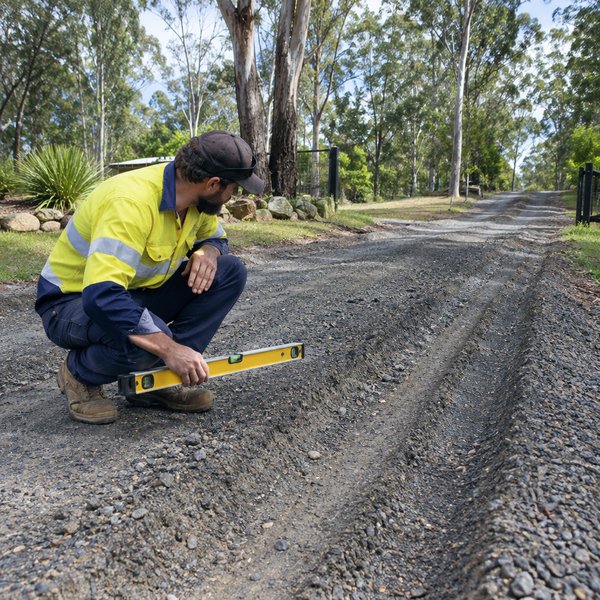
We walk the driveway with you and check the soil type, the existing base and where water runs during heavy rain. We look at fall towards the road, low spots near the garage and any soft patches. That tells us how much base work is needed and where drains should go.
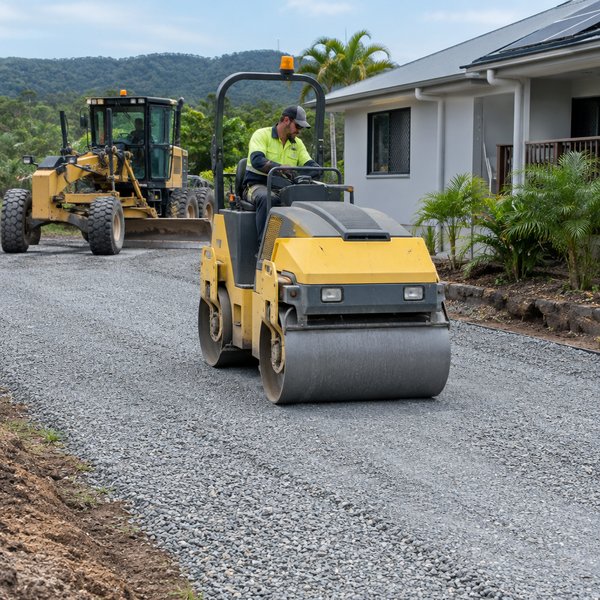
We remove soft material, cart in crushed rock where needed and grade it to the right shape and crossfall. The base is watered and rolled until it's firm and tight. A good seal depends on this layer, so we don't rush it.
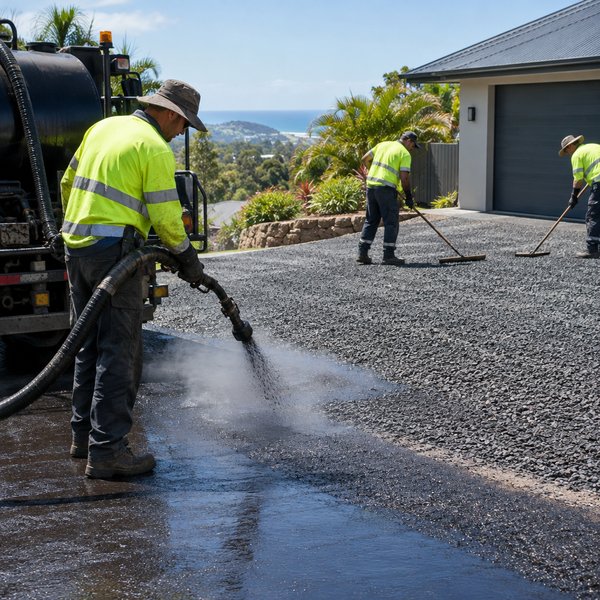
On a new base we apply a primer so the bitumen bonds to the rock. Then hot bitumen is sprayed evenly across the surface and crushed aggregate is spread straight over it. A roller presses the stone into the binder while it's still hot.
We spray a second coat of bitumen and spread a smaller stone to fill the gaps and lock the surface together. The whole driveway is rolled again, then swept to remove excess loose stone. We talk you through how to treat the new seal while it beds in.
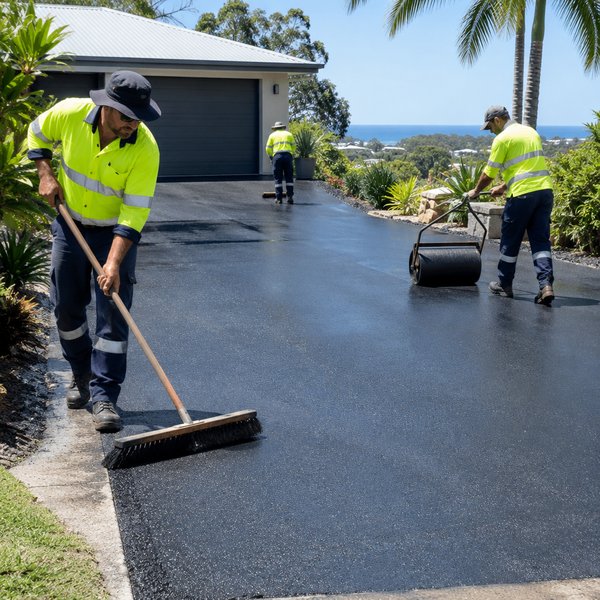
Less dust, fewer potholes and a driveway that copes with summer storms
A sealed surface stops dust blowing into the house in dry weather and mud tracking in after storms. Gravel stays put instead of ending up in the gutter or on the lawn. Your car stays cleaner and the yard looks tidier.
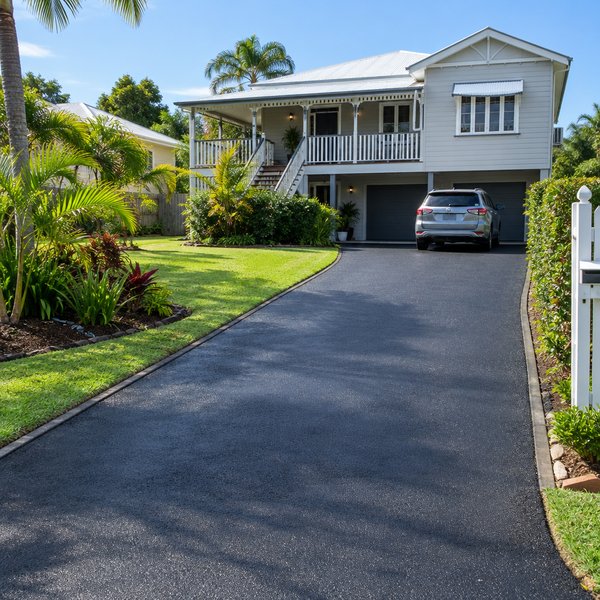
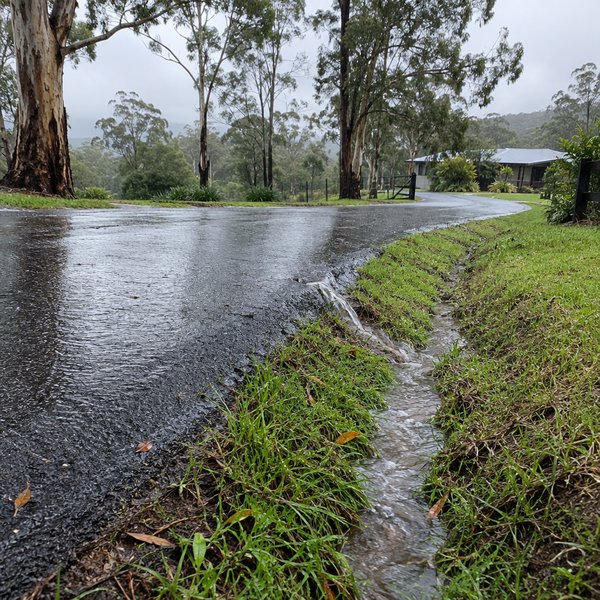
With the right crossfall and drains, storm water runs off the driveway instead of soaking into the base. That means fewer ruts, potholes and soft spots after a wet summer. The driveway stays drivable when it rains hardest.
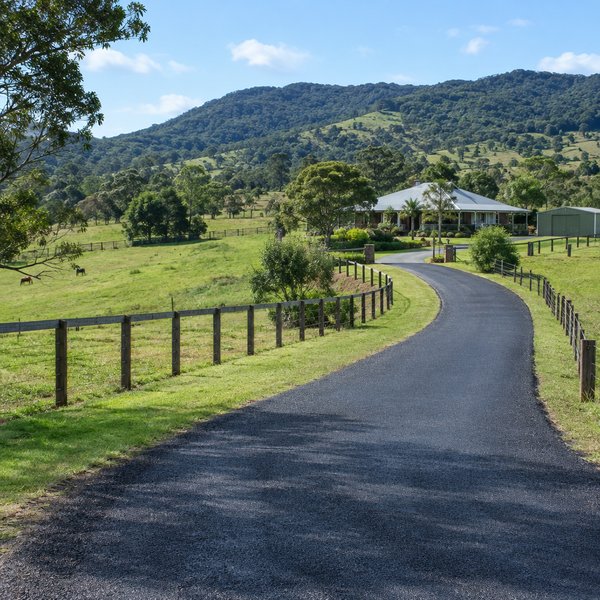
Sprayed bitumen covers long runs and wide turning areas without the cost of hot-mix asphalt. It's a practical choice for acreage tracks, shared accesses and rural blocks. You get a sealed finish where it makes sense for the property and the budget.
Hinterland clay and coastal sand behave very differently under a driveway. We adjust the base depth, compaction and drainage to suit what's under your block. That's what keeps a seal from cracking or rutting after a wet season.
Heavy summer storms are the main reason driveways fail here. We shape the crossfall and add spoon drains or table drains where water needs somewhere to go. Your new seal sheds water instead of holding it.
We do both, so we have no reason to push one over the other. We'll explain which surface suits your driveway, how it'll be used and your budget. If an old seal can be fixed rather than replaced, we'll tell you.
We handle the grading, base work, sealing and repairs ourselves. For shared accesses and small business sites, we can also set out car parks and line marking. One contact keeps the job simple.
Common questions answered
A bitumen driveway is a spray seal: hot bitumen is sprayed on a compacted base and covered with crushed stone, usually in two coats. Asphalt is a hot-mix of bitumen and aggregate laid with a paver and rolled to a smooth, thicker finish. Bitumen seals usually cost less and suit long or rural driveways, while asphalt gives a smoother surface for suburban homes and tighter turning areas.
Often we can, as long as the gravel base is firm and well drained. We usually regrade it, add crushed rock where it's thin and compact it before priming and sealing. If the base is soft clay or full of organic material, we'll need to dig out and rebuild those sections first.
Yes, some loose stone is normal on a new spray seal while the aggregate beds into the bitumen. We sweep off the excess when we finish, and traffic presses the rest in over time. Avoid sharp turns with the steering wheel on the spot and heavy braking in the early weeks.
The main factors are the size of the area, how much base work is needed and whether you want a single or two-coat seal. Drainage work, access for trucks and equipment, and removal of old material also make a difference. We measure up on site and give you a written quote so you know exactly what's included.
Keep drains and gutters beside the driveway clear so storm water can get away. Fix small potholes or edge breaks early before water gets into the base. Over the years the seal will lose stone and dry out in the sun, and a reseal over the existing surface can restore it if the base is still sound.
We provide Bitumen Driveways throughout the Sunshine Coast, QLD and surrounding suburbs.
Don't see your area? Contact us to check if we service your location!
View All Areas