
Bitumen Driveways
Cost-effective two-coat bitumen spray seal driveways for long access drives, sheds and rural properties across the Sunshine Coast. Call Sunshine Coast Asphalt Driveways today!
Learn More →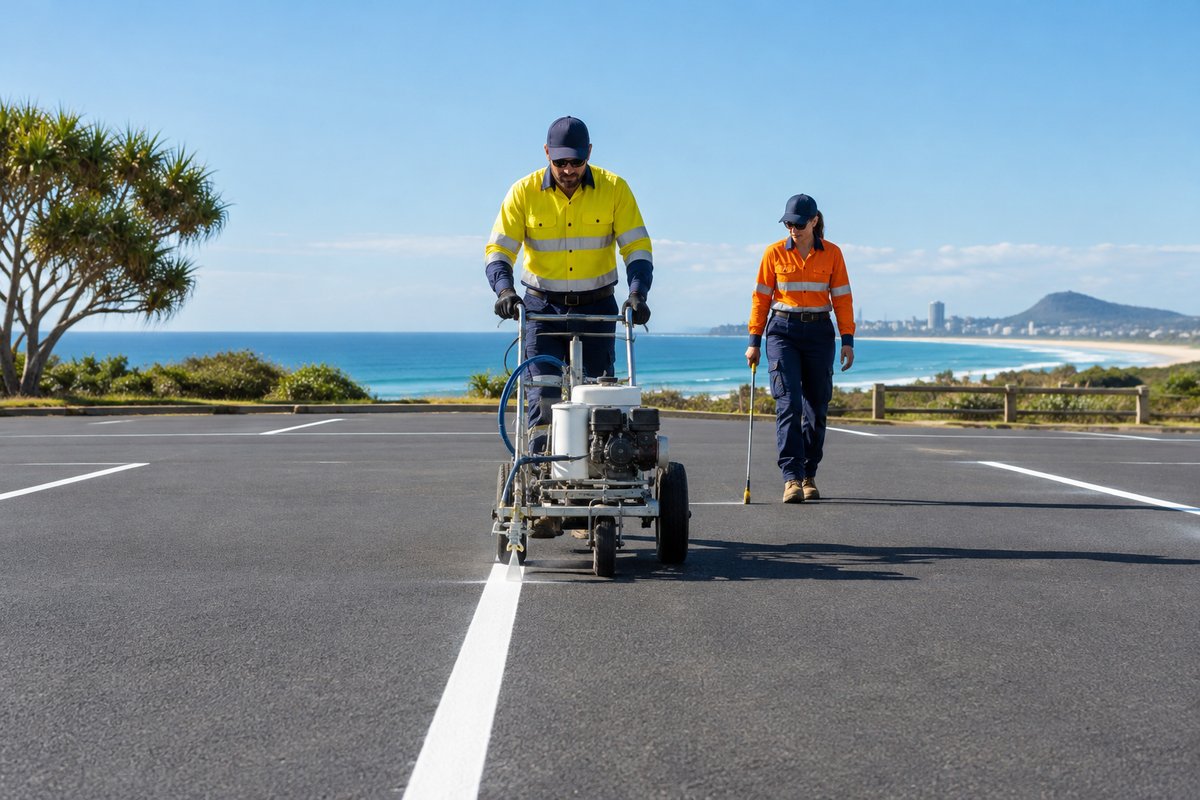
Car park line marking, bay numbering, arrows, disabled bays and wheel stops to finish new and resurfaced asphalt. Call Sunshine Coast Asphalt Driveways today!
Request a Free Quote
Clear lines make a car park work. Without them, drivers park on angles, block exits and cut through pedestrian paths. We mark car parks, driveways, access roads and loading areas across the Sunshine Coast with a walk-behind airless line marking machine, stencils for arrows and symbols, and road marking paint suited to asphalt and bitumen. Where the job calls for it, we drop reflective glass beads into the wet paint so lines stay visible at night and under headlights.
Our local climate is hard on line marking. Strong UV fades paint, and summer storms wash grit and organic matter across the surface. Humidity also slows curing. A fresh line can stay soft longer than you expect, so we watch the forecast closely and avoid painting onto damp asphalt or before a storm rolls in. Before we paint, we blow the surface clean and check that it's dry. That step stops lines from peeling where water has sat in low spots or the surface has gone dusty.
Line marking often comes at the end of a bigger job. If we've just laid or resurfaced your car park or commercial asphalt, we give the new surface time to settle before we mark it. That timing depends on the mix and the weather. For older sites, we can grind off worn or outdated layouts and re-mark them. If the asphalt underneath is cracked or potholed, it's worth looking at asphalt resurfacing and repairs first, because new lines on a failing surface won't last.
From chalk lines to cured paint, here's what happens on site
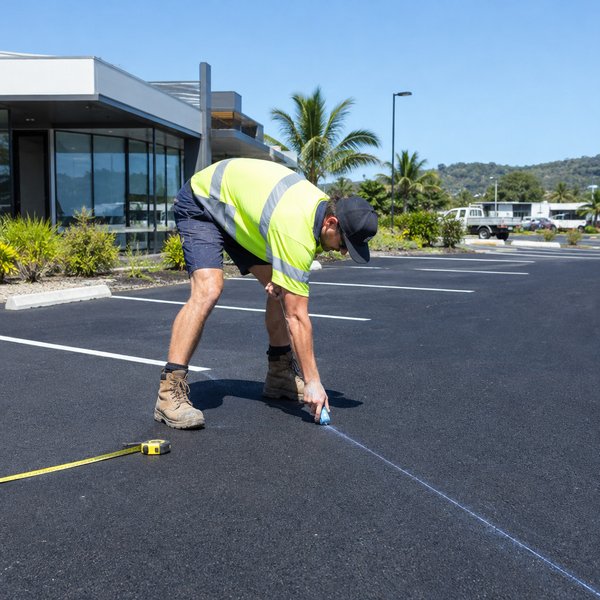
We measure the site and look at traffic flow, entries, exits and pedestrian paths. Then we snap chalk lines and mark reference points on the asphalt so bay widths, aisle widths and accessible spaces sit where they should. This is the stage where we pick up problems, like a bay that blocks a bin store or a turning path that's too tight.
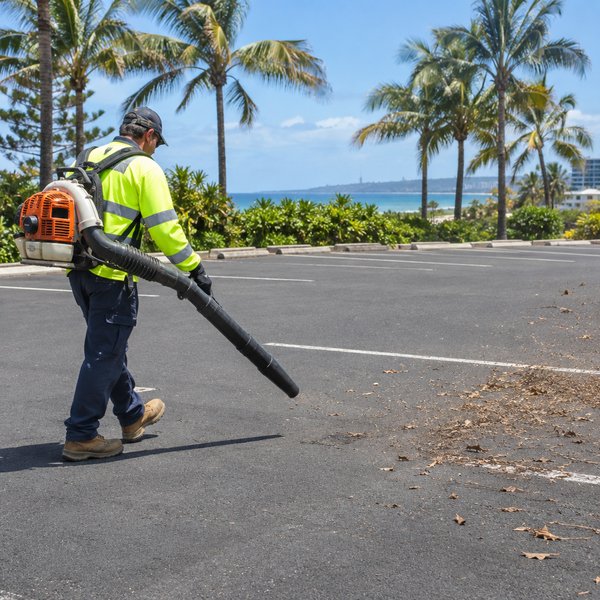
We blow the surface clear of leaves, sand and grit, which builds up fast after coastal storms. Old lines that clash with the new layout get ground off so drivers don't see two sets of markings. We check that the asphalt is dry before any paint goes down.
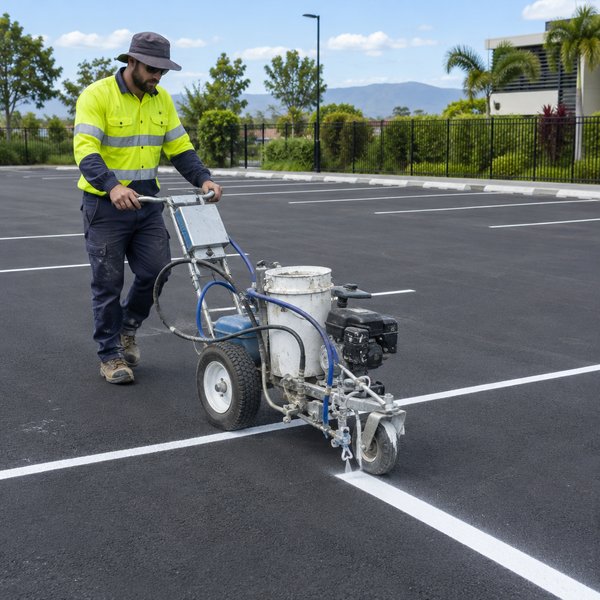
We run the line marking machine along the chalk lines to lay down straight, even lines at a consistent width. Arrows, accessible symbols and lettering go on with stencils and a spray gun. Reflective glass beads are dropped into the wet paint where night visibility matters.
We keep cones and barriers in place while the paint dries, adjusting for the day's humidity. Once the lines are firm, we walk the site, check for overspray or missed sections, and remove the barriers. We'll also talk you through when the layout is likely to need a refresh.
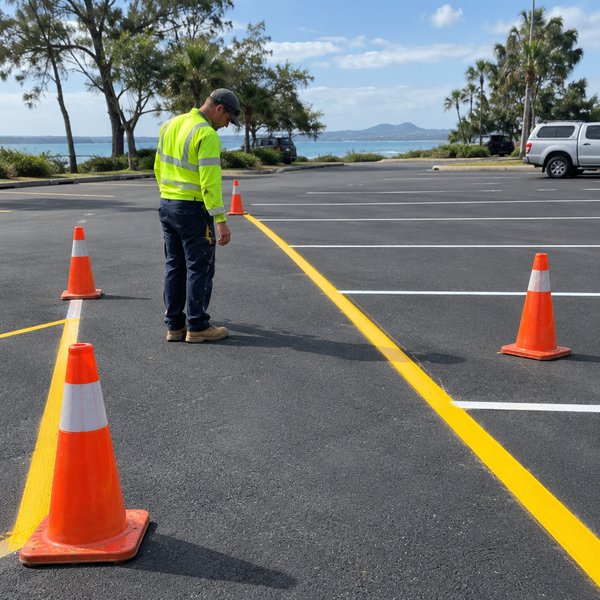
Safer, tidier and easier to use for everyone who parks there
Clear arrows, stop bars and crossings tell drivers where to go and where to slow down. Pedestrians get marked walkways instead of weaving between moving cars. That lowers the risk of bumps and near misses in busy car parks.
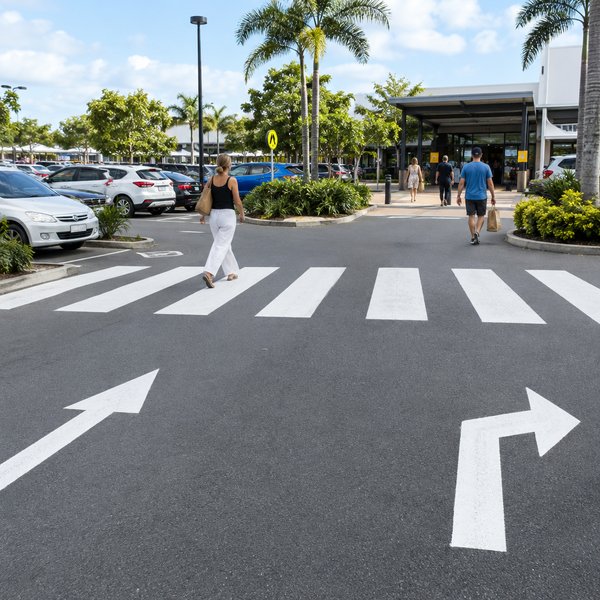
A well-planned layout fits cars in neatly instead of leaving wasted gaps from angled or uneven parking. Tenants, customers and residents find a spot faster. Visitors can also see which bays are reserved, accessible or for loading only.
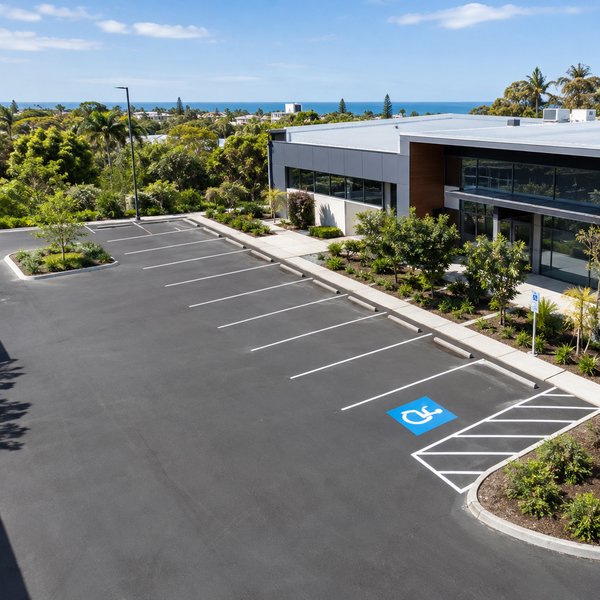
Faded, patchy lines make a property look run down, even if the building is well kept. Crisp new markings on dark asphalt lift the first impression for customers, tenants and buyers. For strata and property managers, it also shows owners that maintenance is being done.
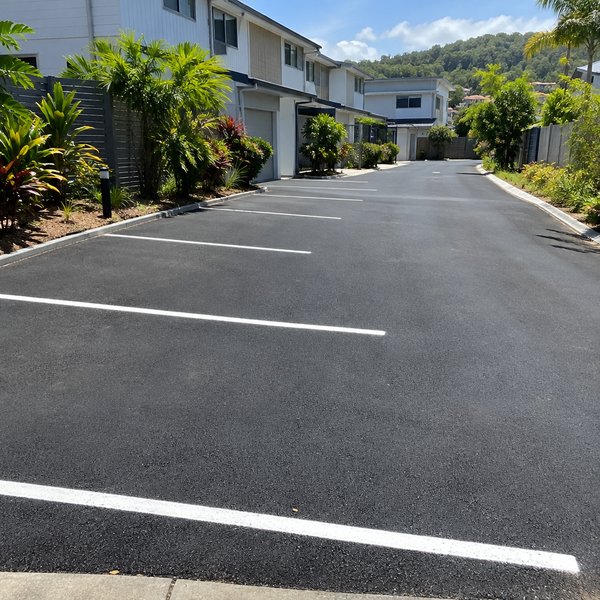
We're an asphalt contractor first, so we understand how a new surface cures and when it's ready for paint. We can lay, resurface and line mark under one job. You don't need to coordinate two separate crews.
Summer storms, humidity and strong UV all affect how line marking performs here. We read the forecast, check surface moisture and allow proper drying time. That gives the paint a better chance of bonding well.
We look at how cars enter, turn and exit before we mark a single line. That means bays you can reverse out of, aisles that suit delivery vans and clear paths for pedestrians. We'll point out problems in an old layout instead of just repainting them.
Lines on cracked or crumbling asphalt break up quickly. We'll tell you honestly if patching or resurfacing should come first. That way your new markings sit on a sound base.
Common questions answered
New asphalt needs time to settle and lose surface oils before paint goes on, or the lines can discolour and wear early. The wait depends on the mix, the thickness and the weather at the time. We'll give you a recommended timeframe when we lay or inspect the surface.
We don't paint onto wet asphalt, because water under the paint leads to peeling. High humidity is workable, but the paint takes longer to dry, so we leave barriers up for longer. During the wet season, we plan around the forecast and may shift the job if storms are likely.
The main factors are the number of bays, total length of lines, the number of arrows and symbols, and whether old lines need grinding off first. Access matters too. Marking a car park that must stay partly open means working in stages. We price each job after seeing the site and the layout you need.
It depends on traffic volume, how much turning happens over the lines, and how much sun the site gets. High-traffic entries and turning areas wear first, while lines in quiet corners hold up longer. We can re-mark just the worn sections or refresh the whole layout.
Yes. We set out accessible bays and shared zones to suit AS 2890 requirements, including bay dimensions and the blue pavement symbol. If your site has council conditions or a plan from an engineer, we work to that layout.
We provide Line Marking throughout the Sunshine Coast, QLD and surrounding suburbs.
Don't see your area? Contact us to check if we service your location!
View All Areas