
Bitumen Driveways
Cost-effective two-coat bitumen spray seal driveways for long access drives, sheds and rural properties across the Sunshine Coast. Call Sunshine Coast Asphalt Driveways today!
Learn More →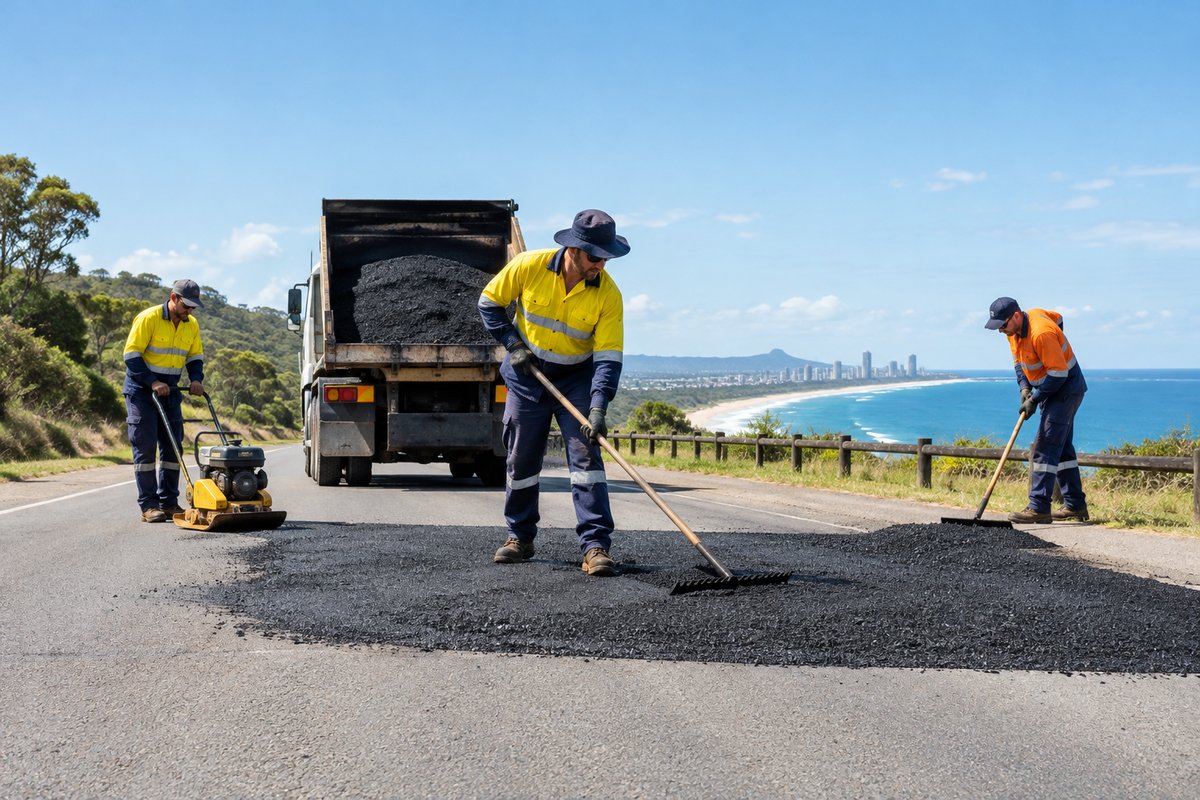
Resurfacing, patching and repairs for cracked, potholed or tired asphalt and bitumen driveways and paved areas. Call Sunshine Coast Asphalt Driveways today!
Request a Free Quote
Most tired driveways don't need ripping out. If the road base underneath is still sound, we can profile the high spots, clean the surface, spray a bitumen emulsion tack coat and lay a fresh hot-mix asphalt overlay that bonds to the old pavement. Where the damage is local, we saw-cut around the failed section to get clean, square edges, dig out the broken material, recompact the base and patch it with hot-mix. We compact every overlay and patch with a vibrating roller or plate compactor so it sits tight and sheds water properly.
The weather on the Sunshine Coast is hard on asphalt. Strong UV dries out the bitumen binder, so the surface goes grey and brittle and starts losing its fine stones. Then the summer storms push water into every crack. On the reactive clay soils through the hinterland, that water softens the base and you get the crocodile-skin cracking and sunken wheel tracks we see on so many older driveways. Down on the sandier coastal blocks, the usual problems are edge breaks, root heave from palms and figs, and water pooling at the garage door because the fall has been lost over time.
Picture a driveway with a pothole near the letterbox, a few cracks spreading from the gutter crossing and a puddle that hangs around for days after rain. We'll show you which parts need a full dig-out and which can be overlaid, so you aren't paying to replace sound pavement. If the surface is past saving, we can talk you through new bitumen driveways as a cost-effective alternative. For body corporates and businesses, we finish resurfaced car parks with fresh line marking so bays and arrows are clear from day one.
From finding the real cause of the damage to rolling the final layer of hot-mix
We walk the driveway with you and look at the type of cracking, where water sits after rain and whether the surface flexes under load. Crocodile cracking and sunken wheel tracks usually point to a base failure, while fine surface cracks and grey ravelled stone point to an ageing binder. This tells us whether you need patching, an overlay or a mix of both.
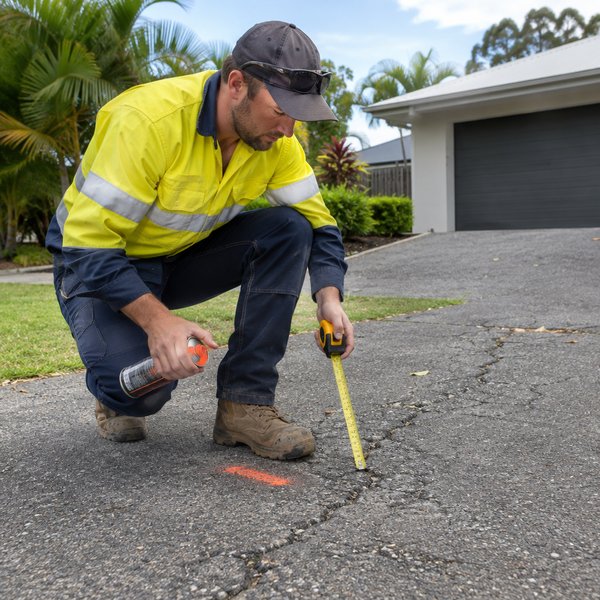
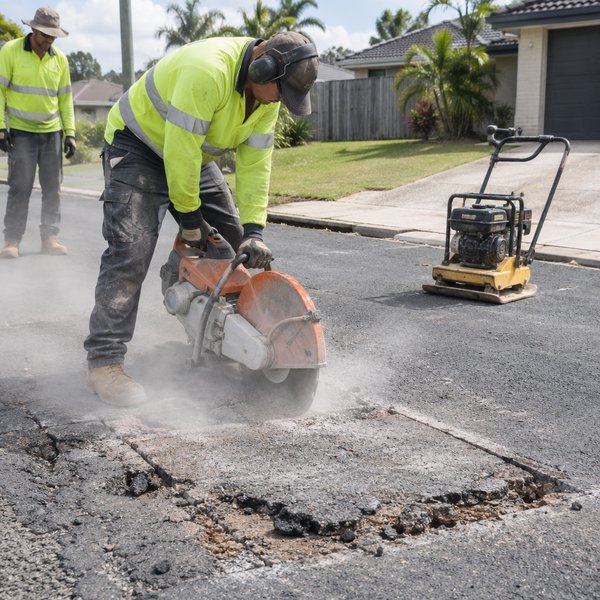
We mark out the damaged areas and saw-cut them square so the new asphalt has a clean vertical edge to butt against. Broken asphalt and wet, soft base material are dug out and replaced with crushed rock road base, then compacted in layers. Getting this step right is what stops the same pothole coming back after the next wet season.
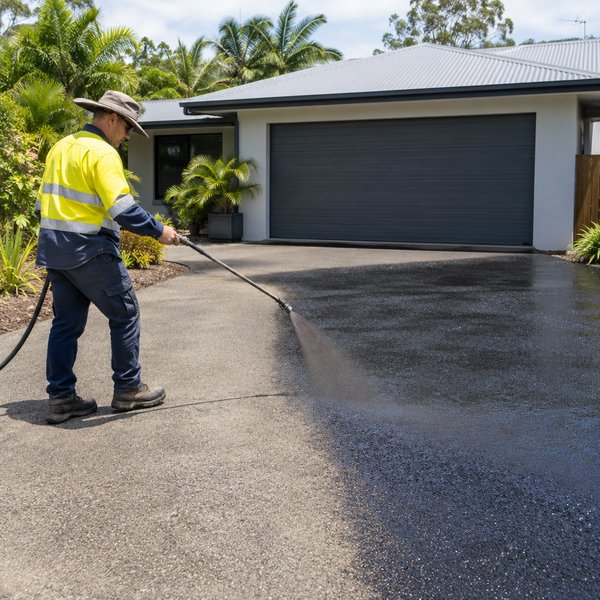
The whole surface is swept and blown clean, and any high spots or uneven joins are profiled down so the new layer sits at the right height and fall. Cracks that will sit under the overlay are sealed first. We then spray an even bitumen emulsion tack coat, which glues the new asphalt to the old pavement so the two layers act as one.
Hot-mix asphalt is laid by paver or spread by hand with rakes and lutes, depending on the size and access of the job. We roll it while it's still hot with a vibrating roller, working the edges and joins carefully so they seal tight. Before we leave, we check the falls direct water to your drains and gutter, not your garage.
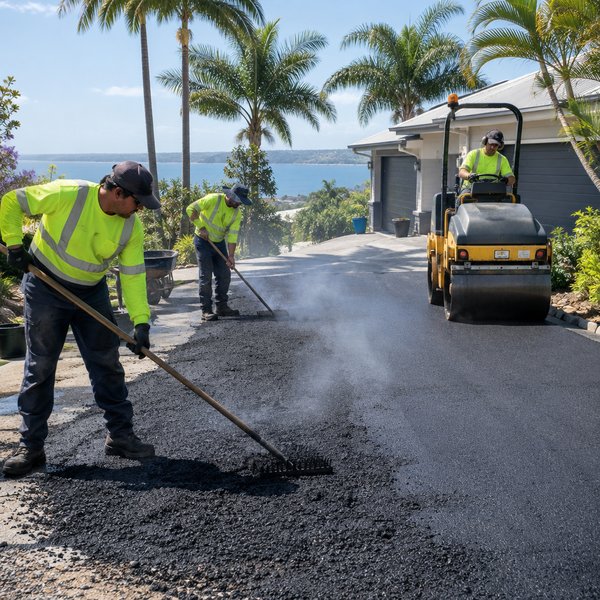
Practical results you'll notice after the next summer storm
Sealing cracks and restoring the fall means summer downpours run off instead of soaking into the base. That protects the road base underneath, which is the part that's expensive to fix. You also lose those puddles at the garage door and front step.
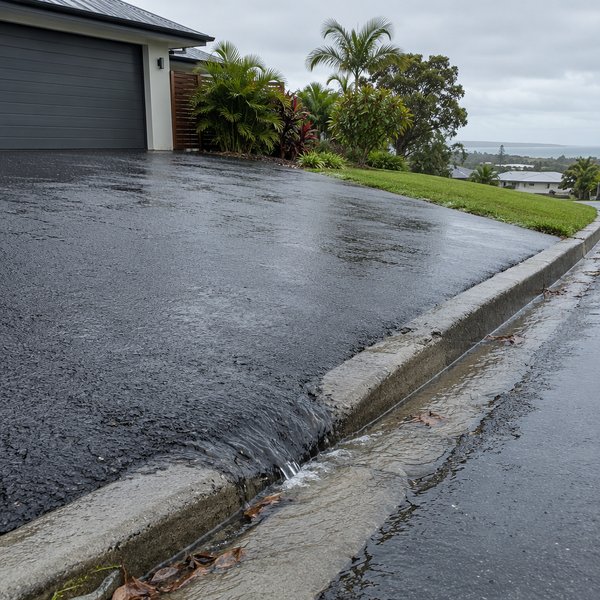
An overlay or targeted repair keeps the sound parts of your driveway in service rather than paying to excavate and rebuild the lot. Fixing small potholes and cracks early also stops them spreading into larger base failures. It's usually the most economical way to deal with an ageing driveway.
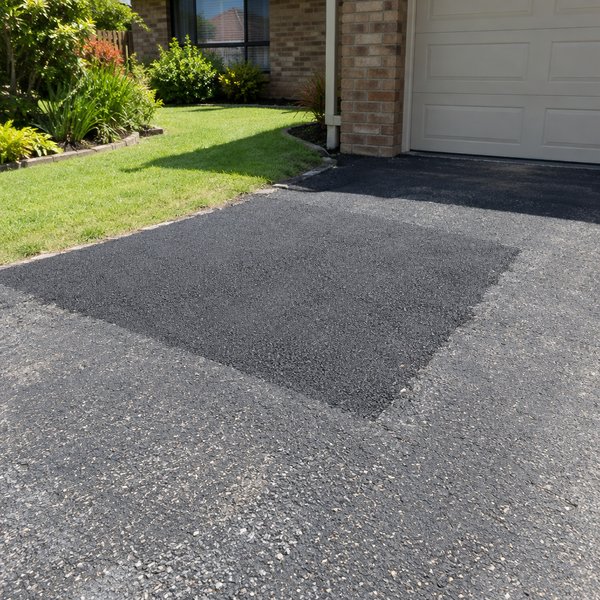
A fresh black surface removes trip hazards, loose stones and wheel-jarring potholes for cars, bikes and prams. It also lifts the look of the whole frontage, which matters if you're selling or leasing. For car parks, a smooth surface with new line marking makes bays and walkways easy to read.
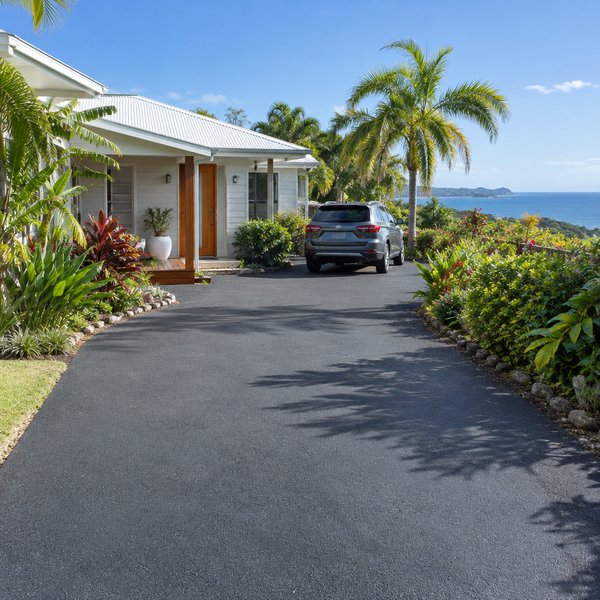
Most potholes on the coast start with water getting into a weak base. We dig out and recompact failed sections before we lay asphalt, so the repair holds through the next wet season instead of sinking again.
Reactive clays in the hinterland, sandy coastal blocks and steep driveways each fail in different ways. We plan the base work, falls and drainage around what's actually under your driveway.
We'll tell you plainly whether patching, an overlay or a new driveway makes more sense. If a cheaper repair will do the job, that's what we'll recommend.
We handle everything from a single pothole near the letterbox to long rural access tracks and strata car parks. For commercial sites, we can include line marking so the job is finished in one go.
Common questions answered
If the base underneath is still firm, an overlay over the existing asphalt is usually the better value option. Where we find soft spots, crocodile cracking or sunken wheel tracks, we cut those sections out and rebuild the base first. We'll show you on site which areas are sound and which aren't.
The main factors are the area, how much base repair is needed, the depth of asphalt, and how easy it is to get machinery onto the site. Steep or narrow driveways and jobs needing a lot of hand work take longer. We give you a written quote after looking at the driveway, so you know what's included.
Yes, but we won't lay hot-mix onto a wet surface or in steady rain because it won't bond or compact properly. Over summer we watch the forecast closely and work around storm days. If rain interrupts a job, we reschedule rather than risk a poor result.
It depends on the weather and how thick the asphalt is, because the surface needs to cool and firm up first. We'll tell you on the day when it's safe to drive on. For the first while, avoid sharp turns on the spot and keep heavy loads, caravan jacks and trailer stands off it, especially on hot afternoons.
Keep water off the base by clearing drains, keeping gutters and downpipes pointing away from the driveway, and getting new cracks sealed while they're small. Watch for tree roots from palms and figs planted close to the edge. Oil and fuel spills soften asphalt, so clean them up quickly.
We provide Asphalt Resurfacing & Repairs throughout the Sunshine Coast, QLD and surrounding suburbs.
Don't see your area? Contact us to check if we service your location!
View All Areas